Protein powder for muscle gain can be useful, but simply drinking more shakes won’t automatically build more muscle.
Protein powder works best as a convenient way to help you consume an appropriate amount of protein alongside resistance training and a balanced diet. Your muscles grow primarily in response to training, while dietary protein provides amino acids that support muscle protein synthesis, repair and adaptation.
So, if you’re wondering how to use protein powder for muscle gain, focus on four things: your total daily protein intake, serving sizes, timing and the type of protein that suits your diet.
If you’re new to protein supplements, start with our Protein Guide for Beginners. You can also compare different protein sources in our Whey vs Plant Protein guide.
Protein Powder for Muscle Gain: Start With Your Diet
The most important rule is simple: protein powder supplements your diet. It doesn’t replace nutritious food or resistance training.
Whole-food protein sources include:
- Chicken and turkey
- Fish
- Eggs
- Lean meat
- Milk and dairy products
- Tofu and tempeh
- Soya
- Beans, lentils and chickpeas
These foods provide protein alongside other nutrients.
Think of protein powder for muscle gain as a convenient way to fill a genuine gap. If your normal meals already provide enough protein, you don’t automatically need additional shakes.
How Much Protein Do You Need for Muscle Gain?
Before deciding how much powder to use, estimate your overall protein requirement.
The International Society of Sports Nutrition (ISSN) states that approximately 1.4–2.0g of protein per kilogram of body weight per day is sufficient for most healthy exercising individuals who want to build or maintain muscle.
You can read the ISSN position stand on protein and exercise for the full recommendations.
A large systematic review and meta-analysis involving 49 studies and 1,863 participants found that protein supplementation enhanced gains in muscle mass and strength during prolonged resistance training. However, increasing protein intake beyond approximately 1.62g/kg/day didn’t produce further gains in fat-free mass on average.
Read the systematic review and meta-analysis for the complete findings.
For many healthy adults doing regular resistance training, approximately 1.6g/kg/day can therefore provide a practical starting point.
Example Daily Protein Targets
Using 1.6g/kg/day as an example:
| Body Weight | Approx. Daily Protein |
|---|---|
| 60kg | 96g |
| 70kg | 112g |
| 75kg | 120g |
| 80kg | 128g |
| 90kg | 144g |
| 100kg | 160g |
These are examples rather than personalised prescriptions.
Our Protein for Beginners guide explains daily protein calculations in more detail.
How Much Protein Powder Should You Take?
This is where protein powder for muscle gain is often overcomplicated.
Don’t decide that you need one or two shakes every day before looking at your diet.
Suppose an 80kg person targets approximately 128g of protein and gets around 105g from normal meals and snacks. They have a gap of roughly 23g.
They could increase the protein in a meal, choose a protein-rich snack or use a shake.
If their normal diet already provides around 128g, adding another 50g from shakes doesn’t automatically mean more muscle growth.
The amount of protein powder you need is therefore the amount that conveniently helps you reach an appropriate overall intake.
How Much Protein Should Be in a Serving?
For exercising individuals, the ISSN gives approximately 20–40g of high-quality protein per serving as a useful general recommendation.
This isn’t an absorption limit.
Your body doesn’t suddenly stop absorbing protein if a meal contains more than 40g. Appropriate serving sizes vary according to factors such as body size, age and how your overall diet is structured.
When using protein powder for muscle gain, always check the product label because scoop sizes and protein content differ between products.
When Should You Take Protein Powder for Muscle Gain?
You don’t need a complicated supplement schedule or a tiny post-workout window.
Protein consumed either before or after resistance exercise can support muscle protein synthesis. The ISSN also notes that the anabolic effect of exercise lasts for at least 24 hours, although it gradually declines.
Your total daily protein intake therefore matters more than racing to consume a shake immediately after training.
That said, there are several convenient times to use protein powder for muscle gain.
After Training
Post-workout is a convenient time for a shake.
If several hours have passed since your last protein-containing meal, consuming protein after training makes sense. If you’ve eaten a substantial meal shortly before your workout, there’s generally less urgency.
A shake is useful because it’s quick and easy — not because muscle growth suddenly stops if you don’t drink one immediately.
Our Pre vs Post Workout Protein Guide looks at timing in more detail.
Before Training
Protein before training can also contribute towards your daily intake.
If you’ve recently eaten a meal containing sufficient protein, an additional shake probably isn’t necessary. If you’re training after several hours without food, a shake may be convenient.
The important point is that protein powder for muscle gain can work before or after training.
Between Meals
A shake between meals can help when breakfast, lunch or another meal contains relatively little protein.
For example, an afternoon shake could help someone reach their daily target without substantially changing dinner.
Before Bed
Pre-sleep protein is another option rather than a requirement.
Research suggests protein consumed before sleep can increase overnight muscle protein synthesis, with much of the research examining casein. However, you don’t need an additional bedtime shake if you’ve already met your protein requirements.
Use it when it fits your diet rather than treating it as compulsory.
How Often Should You Drink Protein Shakes?
There’s no required number.
Depending on your diet, you might need:
- No shakes
- One shake
- Occasionally two
- A shake only on training or particularly busy days
This is fundamental to using protein powder for muscle gain properly.
Your protein target matters. The number of shakes doesn’t.
If whole foods comfortably get you there, that’s fine. If a shake makes reaching the target easier, use one.
Whey Protein for Muscle Gain
Whey is one of the most widely researched protein supplements.
It’s derived from milk, provides all nine essential amino acids and naturally contains a relatively high proportion of leucine. It’s also rapidly digested.
Those characteristics make whey a convenient option for protein powder for muscle gain, but it doesn’t have to be reserved for immediately after training.
You can use whey whenever it conveniently contributes towards your daily protein intake.
ProteinHype’s Vanilla WheyFuel and Chocolate WheyFuel provide whey-based options. Check the current product label for protein content, serving sizes, ingredients and allergens.
Can You Use Plant Protein for Muscle Gain?
Yes.
Plant proteins can also contribute towards a muscle-building diet.
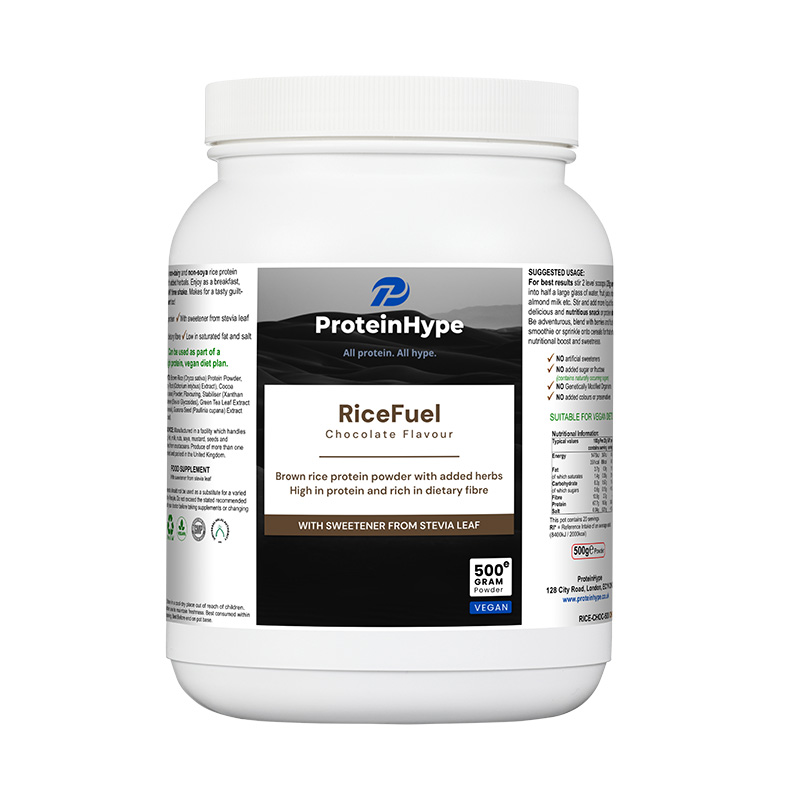
Common options include pea, rice, soya, hemp and plant protein blends. Individual plant proteins differ in amino-acid composition and digestibility, so your overall diet and total protein intake remain important.
PeaFuel Blend provides a plant-based option.
You can learn more in our Beginner’s Guide to Plant-Based Protein.
When choosing protein powder for muscle gain, consider your dietary preferences, protein per serving, amino-acid profile, allergens, ingredients, taste and how easily the product fits your normal diet.
You don’t need whey simply because you’re trying to build muscle.
Can You Build Muscle Without Protein Powder?
Absolutely.
You don’t need protein powder for muscle gain. You need an appropriate protein intake, which can come entirely from food.
Protein powder is simply convenient.
Research indicates that protein supplementation can enhance muscle and strength gains alongside resistance training, but the effect depends partly on existing protein intake.
If you’re already eating an appropriate amount, adding more powder may provide little additional benefit.
That’s why it’s better to view protein powder for muscle gain as a tool rather than a requirement.
Does Protein Powder Replace Training?
No.
Resistance training provides the stimulus that encourages your muscles to adapt. Protein supports that process nutritionally.
Drinking shakes without an appropriate resistance-training programme won’t produce the same adaptations.
A good muscle-building strategy therefore combines:
- Progressive resistance training
- Appropriate protein intake
- Sufficient overall nutrition
- Recovery and sleep
- Consistency
Our guide to how long it takes to build muscle explains what realistic progress can look like.
Easy Ways to Use Protein Powder
Protein powder for muscle gain doesn’t always have to be mixed with water in a shaker.
You could add an appropriate serving to:
- Porridge
- Greek yoghurt
- Smoothies
- Pancakes
- Overnight oats
Our 5 Protein Shake Recipes provides more ideas.
You can even incorporate it into coffee. See our Protein Coffee guide for tips on mixing it without creating a lumpy drink.
Common Protein Powder Mistakes
Focusing Too Much on Timing
Perfect timing won’t compensate for consistently consuming too little protein overall.
Get your daily intake right first.
Assuming More Means More Muscle
Once you’re consuming an appropriate amount of protein, continually increasing your intake doesn’t guarantee faster muscle growth.
Replacing Too Much Food With Shakes
Whole foods provide nutrients beyond protein. Powder should complement your normal diet rather than dominate it.
Forgetting About Calories
Protein powder contains energy.
Account for shakes as part of your overall diet, particularly if you’re deliberately managing your calorie intake.
Expecting Powder to Compensate for Poor Training
Even the best protein powder for muscle gain can’t replace an appropriate resistance-training stimulus.
A Simple Protein Powder for Muscle Gain Plan
You don’t need a complicated supplement programme.
1. Estimate Your Protein Target
For many healthy adults regularly resistance training, approximately 1.6g/kg/day provides a useful starting point.
2. Check Your Current Diet
Estimate how much protein you already consume on a normal day.
3. Calculate the Difference
If you’re targeting 130g and your meals provide approximately 105g, you’re around 25g short.
4. Decide How to Fill It
You can adjust your meals, add a protein-rich snack or use protein powder.
5. Spread Protein Across Your Day
Include useful amounts across several meals rather than consuming very little all day and most of your protein at dinner.
6. Train Consistently
Follow an appropriate progressive resistance-training programme.
This keeps protein powder for muscle gain in its proper role: supporting your overall nutrition rather than becoming the centre of your muscle-building plan.
Protein Powder for Muscle Gain: The Bottom Line
Protein powder for muscle gain is useful because it provides a convenient way to help meet your daily protein requirements.
It doesn’t build muscle by itself, you don’t have to consume it immediately after training and you don’t need a predetermined number of shakes each day.
For most healthy exercising individuals, approximately 1.4–2.0g/kg/day is considered sufficient, while around 1.6g/kg/day provides a practical starting point for many people doing regular resistance training.
Start with your diet. Estimate your protein requirement, determine how much you’re already getting from food and use powder when it conveniently fills a gap.
Whey and plant protein can both contribute towards your intake, and timing can fit around your meals and training.
That’s the most useful way to approach protein powder for muscle gain: get your overall protein intake right, train consistently and use supplements when they make achieving your nutrition goals easier.
Explore ProteinHype’s protein powder collection to compare whey and plant-based options.
Note: This content is for informational purposes only and is not medical advice. Individual protein requirements vary. Speak to a qualified healthcare professional or registered dietitian if you have kidney disease, another medical condition, are pregnant or breastfeeding, or have concerns about your individual dietary requirements. Food supplements should not be used as a substitute for a varied, balanced diet.
Best Selling Protein Supplements
-

WheyFuel (Vanilla Flavour)
£25.99 — or subscribe to save 10% -
WheyFuel (Chocolate Flavour)
£25.99 — or subscribe to save 10% -
RiceFuel (Chocolate Flavour)
£15.99 — or subscribe to save 10%