Protein for beginners can seem unnecessarily complicated.
You might hear that adults need around 0.75g per kilogram of body weight, while someone at the gym tells you to eat 2g per kilogram — or even more.
So which number should you actually use?
The answer depends on what you’re doing.
Someone who isn’t regularly training doesn’t necessarily need the same amount as someone lifting weights several times per week. Your goals, activity, body weight and overall diet all matter.
This guide explains protein for beginners without giving everyone the same arbitrary target. You’ll learn the UK recommendation for adults, what research suggests for people who exercise and how to calculate a sensible starting point.
For a broader introduction to what protein does, different protein sources and supplements, read our Protein Guide for Beginners.
Protein for Beginners: How Much Do You Need?
There isn’t one protein target that applies to every beginner.
For UK adults, the Reference Nutrient Intake (RNI) is 0.75g of protein per kilogram of body weight per day.
The British Nutrition Foundation gives the following example:
A 60kg adult would need approximately:
60 × 0.75 = 45g of protein per day
A 75kg adult would need approximately:
75 × 0.75 = 56g per day
You can read more about the UK recommendation in the British Nutrition Foundation’s guide to protein.
However, these general population recommendations aren’t designed specifically to maximise adaptations to regular exercise.
If you’ve started resistance training or another demanding exercise programme, your requirements may be higher.
How Much Protein Do Beginners Need for Exercise?
This is where protein for beginners becomes more individual.
The International Society of Sports Nutrition (ISSN) states that approximately 1.4–2.0g of protein per kilogram of body weight per day is sufficient for most healthy exercising individuals who want to build or maintain muscle.
You can read the ISSN position stand on protein and exercise for the full recommendations.
That doesn’t mean every beginner needs to jump immediately to 2.0g/kg.
A major systematic review and meta-analysis involving 49 studies and 1,863 participants found that protein supplementation enhanced gains in muscle size and strength during prolonged resistance training.
However, protein intakes above approximately 1.62g/kg/day didn’t produce further gains in fat-free mass on average.
You can read the protein supplementation and resistance-training meta-analysis for the complete findings.
For a healthy beginner regularly resistance training, around 1.6g/kg/day can therefore provide a practical evidence-based target.
Protein for Beginners: Daily Intake Calculator
If you’re resistance training regularly and want to use approximately 1.6g/kg as a starting target, the calculation is straightforward:
Body weight in kilograms × 1.6 = grams of protein per day
Here are some examples:
| Body Weight | Calculation | Approx. Daily Protein |
|---|---|---|
| 50kg | 50 × 1.6 | 80g |
| 60kg | 60 × 1.6 | 96g |
| 70kg | 70 × 1.6 | 112g |
| 75kg | 75 × 1.6 | 120g |
| 80kg | 80 × 1.6 | 128g |
| 90kg | 90 × 1.6 | 144g |
| 100kg | 100 × 1.6 | 160g |
These numbers aren’t personalised medical prescriptions.
They’re simply examples showing how an exercise-focused target can be calculated.
Your individual requirements may differ.
What If You’re Not Exercising Regularly?
Not every beginner asking about protein is a beginner at weight training.
Perhaps you’re simply trying to improve your diet.
When considering protein for beginners who aren’t regularly training, the UK adult RNI remains 0.75g/kg/day.
The British Nutrition Foundation notes that most people in the UK already consume more protein than the general requirement and that the importance of high-protein diets is often exaggerated for the general population.
It also notes that people who regularly take part in activities such as weight training, running or cycling may have higher requirements to support muscle growth and repair.
That’s an important distinction when discussing protein for beginners.
Your target should reflect what your body is actually being asked to do.
Is 2g of Protein per Kilogram Too Much?
When discussing protein for beginners, 2g/kg isn’t necessarily excessive for a healthy person who trains regularly.
The ISSN’s range for exercising individuals extends to approximately 2.0g/kg/day.
But “safe to consume” and “necessary for better results” aren’t the same thing.
If you’re already consuming around 1.6g/kg/day and training effectively, increasing your intake simply because a higher number sounds better doesn’t guarantee additional muscle growth.
More protein isn’t automatically more effective.
Our Protein Myths guide looks at this and several other common misconceptions in more detail.
How Much Protein Should You Eat at Each Meal?
Once you’ve calculated a protein for beginners target, you need a practical way to eat it.
For protein for beginners, spreading your intake across several meals is usually easier than trying to consume most of it at dinner.
The ISSN suggests approximately 20–40g of high-quality protein per serving as a useful general recommendation for exercising individuals, with servings ideally distributed throughout the day.
That’s a guideline rather than a strict ceiling.
Your body doesn’t suddenly stop absorbing protein when you consume more than 40g.
The appropriate serving will depend partly on your daily target and how many meals you normally eat.
Example: 120g Per Day
Someone targeting approximately 120g could distribute it like this:
Breakfast: 25g
Lunch: 30g
Afternoon snack: 20g
Dinner: 35g
Evening snack: 10g
Total: approximately 120g.
You don’t need to hit exactly the same number at every meal.
The purpose is simply to avoid reaching the evening and discovering you’ve consumed very little protein all day.
What Foods Are High in Protein?
A good protein for beginners diet can provide most or all of your daily requirements through whole foods.
Useful options include:
- Chicken
- Turkey
- Lean beef
- Fish
- Eggs
- Milk
- Greek yoghurt
- Cottage cheese
- Beans
- Lentils
- Chickpeas
- Tofu
- Tempeh
- Soya products
- Nuts and seeds
The protein content varies considerably between foods and portion sizes, so check packaging or reliable nutrition information when you need accurate figures.
A varied diet also provides nutrients that you won’t necessarily get from an isolated protein powder.
That’s why protein for beginners should start with the overall diet rather than supplements.
Do Beginners Need Protein Powder?
No.
Protein powder isn’t an essential part of protein for beginners or a requirement for building muscle.
You can meet your requirements entirely through normal food.
The main advantage of protein powder is convenience.
Imagine your daily target is approximately 120g and your normal meals provide around 95g.
You could adjust those meals or add another protein-rich food.
Alternatively, a shake could provide a convenient way to help cover the difference.
Neither approach is inherently superior.
Protein powder is simply another food-derived source of protein.
If you’d like to understand where supplements can be useful, read our guide to the benefits of protein supplements.
Protein for Beginners: Whey or Plant Protein?
Both can contribute towards your daily intake.
Whey is derived from milk and provides all nine essential amino acids. It’s widely used because it’s convenient and has a strong essential amino-acid profile.
Plant proteins can also support your protein intake.
Pea, rice, hemp, soya and plant blends all have different nutritional characteristics.
You don’t have to choose whey simply because you’ve started lifting weights.
Likewise, choosing a plant protein doesn’t automatically make your diet healthier.
Pick something that suits your dietary requirements, preferences and overall diet.
Our Whey vs Plant Protein comparison explains the differences in more detail.
Example High-Protein Day for a Beginner
Here’s a simple protein for beginners example showing how someone could distribute approximately 120g across a day.
The precise protein content of foods varies by product and serving size, so treat these numbers as illustrations rather than exact nutritional values.
Breakfast
Greek yoghurt with oats and fruit.
Approximately 20–25g protein depending on portions and product.
Lunch
Chicken salad or wrap with a substantial serving of chicken.
Approximately 30–35g protein.
Afternoon
A protein-rich snack or shake.
Approximately 20–25g protein.
Dinner
Fish, meat, tofu or another protein-rich main ingredient alongside vegetables and a carbohydrate source.
Approximately 35–40g protein.
That gets you into the region of 110–125g without requiring protein at every possible opportunity.
Where Can Protein Powder Fit?
When it comes to protein for beginners, a supplement can fit almost anywhere in your day when convenience is useful.
For example, Vanilla WheyFuel or Chocolate WheyFuel can provide a whey-based option.
If you prefer a plant-based product, PeaFuel Blend provides an alternative.
Always check the current product label for the exact serving size, protein content, ingredients and preparation instructions rather than relying on generic estimates.
The important point is that a shake should fit into your target rather than automatically being added on top of everything else.
Do You Need Protein Immediately After Exercise?
No.
This is another area where protein for beginners often becomes unnecessarily complicated.
You don’t need to race from the gym floor to your shaker within 30 minutes.
Protein consumed around exercise can be useful, but your overall intake and what you’ve eaten during the rest of the day also matter.
If you trained several hours after your last meal, eating afterwards makes sense.
If you ate a substantial protein-containing meal shortly before training, there’s less urgency.
Our Pre vs Post Workout Protein Guide explains this in detail.
Can You Eat All Your Protein in One Meal?
Your body doesn’t simply discard protein because you’ve eaten a large serving.
However, consuming nearly all of your daily protein at one meal isn’t generally the most practical strategy.
For exercising people, spreading servings throughout the day provides repeated opportunities to supply amino acids.
It’s also usually much easier to eat 120g of protein across three or four meals than trying to consume most of it at dinner.
A better protein for beginners approach is to think about distribution rather than obsessing over a strict maximum per meal.
What If Your Goal Is Weight Loss?
Protein can still form part of your diet when losing weight.
However, increasing protein doesn’t override the importance of overall energy intake.
If fat loss is your goal, you still need to consider the total amount of energy you’re consuming.
Protein-rich foods can be incorporated into an energy-controlled diet, and resistance training can help maintain or develop muscle.
But a protein shake still contains energy.
Adding shakes to your existing diet without accounting for them doesn’t automatically promote fat loss.
What If Your Goal Is Building Muscle?
For a healthy beginner doing regular resistance training, approximately 1.6g/kg/day provides a useful evidence-based starting point.
But even when planning protein for beginners who want to build muscle, protein intake is only one part of the process.
You also need an appropriate resistance-training stimulus, sufficient overall nutrition and recovery.
Simply increasing your intake from 1.6g/kg to 2.0g/kg won’t compensate for inconsistent training.
Our guide on how long it takes to build muscle explains the wider process.
Three Protein Mistakes Beginners Should Avoid
Understanding protein for beginners becomes much easier when you avoid three common mistakes.
1. Assuming More Is Always Better
You need enough protein for your requirements.
That doesn’t mean continually increasing your intake produces increasingly better results.
2. Ignoring the Rest of Your Diet
Protein isn’t the only nutrient that matters.
Your diet also needs to provide appropriate carbohydrate, fats, fibre, vitamins and minerals.
Don’t crowd everything else out simply to chase a protein number.
3. Treating Supplements as Mandatory
Protein powder can be extremely convenient.
But convenience and necessity aren’t the same thing.
Use supplements when they solve a genuine problem in your diet.
Protein for Beginners: Your Simple Starting Plan
If all the numbers still seem confusing, use this straightforward approach.
If you’re not regularly training: Start by looking at the UK adult recommendation of 0.75g/kg/day and assess your overall diet.
If you’re regularly resistance training: Around 1.6g/kg/day can provide a practical evidence-based starting target for many healthy adults.
Spread your intake: Include protein across several meals rather than saving almost everything for one sitting.
Prioritise food: Build your meals around nutritious protein-containing foods.
Use powder when convenient: A shake can help cover a shortfall, but it isn’t compulsory.
Review your diet as your training changes: Your nutritional requirements aren’t fixed forever.
Protein for Beginners: The Bottom Line
So, how much protein do beginners need?
For UK adults generally, the RNI is 0.75g per kilogram of body weight per day.
If you’re healthy and regularly exercising, particularly if you’re resistance training, your requirements can be higher. The ISSN recommends approximately 1.4–2.0g/kg/day for most exercising individuals.
For beginners focused on resistance training and muscle growth, around 1.6g/kg/day is a sensible evidence-based starting point, rather than automatically aiming for the highest possible intake.
From there, focus on consistency.
Spread your protein across your normal meals, prioritise a varied diet and use supplements when they make reaching your target more convenient.
That’s the foundation of protein for beginners: enough to support what you’re asking your body to do without turning nutrition into a numbers competition.
You can explore ProteinHype’s protein powder collection if you’d like a convenient way to supplement your normal food intake.
Note: This content is for informational purposes only and is not medical advice. Individual protein requirements can vary. Speak to a qualified healthcare professional or registered dietitian if you have kidney disease, another medical condition, are pregnant or breastfeeding, or have concerns about your individual dietary requirements. Food supplements should not be used as a substitute for a varied, balanced diet.
Best Selling Protein Supplements
-

WheyFuel (Vanilla Flavour)
£25.99 — or subscribe to save 10% -
WheyFuel (Chocolate Flavour)
£25.99 — or subscribe to save 10% -
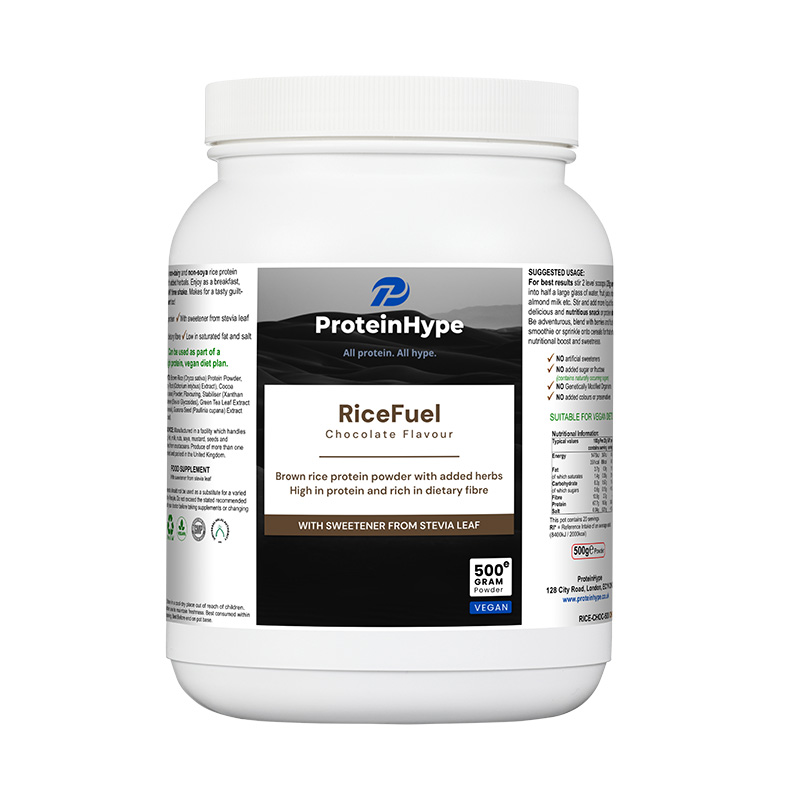
RiceFuel (Chocolate Flavour)
£15.99 — or subscribe to save 10%