Protein is talked about everywhere in fitness and nutrition, but getting started doesn’t need to be complicated.
You don’t need to live on chicken and protein shakes, calculate every amino acid you consume or follow a complicated supplement schedule.
You do need to understand what protein does, roughly how much you need and which foods can help you get enough.
This protein guide for beginners covers the fundamentals, including daily protein requirements, food sources, protein powder and timing.
If you’re interested specifically in supplements, you can also read our guide to the benefits of protein supplements.
Protein Guide for Beginners: What Is Protein?
Protein is one of the three main macronutrients, alongside carbohydrate and fat.
It’s made from amino acids that your body uses for numerous functions, including building and maintaining body tissues.
There are 20 amino acids commonly involved in human proteins. Nine are considered essential amino acids because your body cannot produce sufficient amounts itself, so they need to come from your diet.
Protein contributes to the maintenance and growth of muscle mass, but its role extends far beyond muscle.
Proteins are also involved in enzymes, cell signalling, immune function and many structures throughout the body.
The British Nutrition Foundation’s guide to protein provides more information about its functions and dietary sources.
Protein Guide for Beginners: Why Do You Need Protein?
A useful protein guide for beginners should make one thing clear: protein isn’t only important for bodybuilders.
Everyone needs dietary protein.
Muscle Growth and Maintenance
Protein provides amino acids required to maintain and build muscle tissue.
If you’re resistance training, combining an appropriate protein intake with your training can support increases in muscle mass and strength.
Training remains essential. Simply eating additional protein doesn’t create the same stimulus for muscle growth.
Tissue Growth and Repair
Protein contributes to the growth and maintenance of tissues throughout your body.
This is one reason requirements can differ according to age, activity and circumstances such as pregnancy.
Enzymes and Cell Functions
Proteins are involved in enzymes, cell signalling, immune function and many other biological processes.
So although gym conversations tend to focus on muscle, protein has much broader roles.
Satiety
Protein-rich foods can also contribute to feelings of fullness, which may make them useful within a balanced diet.
That doesn’t mean protein automatically causes weight loss. Overall energy intake still matters.
Protein Guide for Beginners: How Much Protein Do You Need?
There isn’t one protein target that’s appropriate for everybody.
Your requirements depend on factors including body weight, activity level, training and individual circumstances.
For UK adults, the Reference Nutrient Intake (RNI) is 0.75g of protein per kilogram of body weight per day.
That works out at approximately:
| Body Weight | UK Adult RNI |
|---|---|
| 60kg | 45g |
| 70kg | 52.5g |
| 75kg | 56g |
| 80kg | 60g |
| 90kg | 67.5g |
| 100kg | 75g |
The British Nutrition Foundation notes that average UK protein consumption is already above these general requirements.
However, people who exercise regularly, particularly those doing resistance training, may benefit from higher intakes.
The International Society of Sports Nutrition (ISSN) states that approximately 1.4–2.0g/kg/day is sufficient for most healthy exercising individuals who want to build or maintain muscle.
You can read the ISSN position stand on protein and exercise for the full guidance.
Protein Guide for Beginners: Protein for Muscle Building
If building muscle is your main goal, your requirements are likely to be higher than the general adult RNI.
A major systematic review and meta-analysis involving 49 studies and 1,863 participants found that protein supplementation enhanced gains in muscle mass and strength during prolonged resistance training.
However, increasing total protein intake beyond approximately 1.62g/kg/day didn’t produce additional gains in fat-free mass on average.
You can read the protein and resistance-training meta-analysis for the complete findings.
For many healthy adults doing regular resistance training, around 1.6g/kg/day can therefore provide a useful practical starting point.
For example:
75kg × 1.6g = 120g of protein per day
This doesn’t mean everyone who weighs 75kg needs exactly 120g. It’s an example for someone regularly resistance training rather than a universal recommendation.
For a more detailed calculation, read our guide to how much protein beginners need.
Do You Need More Protein When Losing Weight?
Protein can be particularly important when you’re reducing calorie intake because maintaining lean mass may become a priority.
People who are resistance trained and dieting aggressively may sometimes use protein intakes above the amounts required under normal energy balance.
However, this doesn’t mean every person trying to lose weight needs an extremely high-protein diet.
Your appropriate intake depends on your body weight, training, calorie deficit and individual circumstances.
A protein guide for beginners is best used as a starting point rather than a personalised prescription.
Protein Guide for Beginners: Calculating Your Intake
The basic calculation is straightforward:
Body weight in kilograms × protein target in grams per kilogram = daily protein intake
For example, a healthy 70kg adult regularly resistance training might use 1.6g/kg as a practical starting point:
70 × 1.6 = 112g per day
An 80kg person using the same example:
80 × 1.6 = 128g per day
You don’t need to hit precisely the same number every single day.
Think of your target as a useful guide for structuring your diet rather than a number you must reach to the gram.
Protein Guide for Beginners: What Does 120g Look Like?
Protein doesn’t have to come from supplements.
A day’s food could include protein from several sources:
| Meal | Example |
|---|---|
| Breakfast | Eggs with wholegrain toast and yoghurt |
| Lunch | Chicken, tofu or beans with salad and grains |
| Snack | Greek yoghurt, cottage cheese or a protein-rich alternative |
| Dinner | Fish, lean meat, tempeh or lentils with vegetables |
| Optional | Protein shake if needed |
The precise protein content depends on the foods, brands and portion sizes you use, so check packaging or reliable nutrition information if you’re tracking accurately.
This protein guide for beginners doesn’t prescribe a fixed meal plan because there are many different ways to reach an appropriate daily intake.
Protein Guide for Beginners: Best Protein Sources
A varied diet can provide protein from both animal and plant sources.
Animal Protein Sources
Common options include:
- Chicken
- Turkey
- Lean beef
- Fish
- Eggs
- Milk
- Greek yoghurt
- Cottage cheese
Animal proteins generally provide all nine essential amino acids in useful proportions.
They can also provide other nutrients depending on the food, such as iron, vitamin B12, calcium or omega-3 fatty acids.
Plant Protein Sources
You can also obtain substantial amounts of protein from plants.
Examples include:
- Soya
- Tofu
- Tempeh
- Lentils
- Chickpeas
- Beans
- Peas
- Edamame
- Nuts and seeds
- Quinoa
Plant proteins vary in their amino-acid composition and digestibility.
You don’t need to deliberately combine complementary proteins at every meal. Eating a varied diet containing different plant protein sources across the day can provide the essential amino acids you need.
Our Beginner’s Guide to Plant-Based Protein explains this in more detail.
Protein Guide for Beginners: Is Protein Powder Necessary?
No.
This is one of the most important points in any protein guide for beginners.
You can meet your protein requirements entirely through food.
Protein powder is useful because it’s convenient, easy to measure and can help fill a gap when your normal meals don’t provide enough.
For example, imagine you’re aiming for approximately 120g per day and your normal meals provide around 100g.
You could:
- Increase the protein in one meal
- Add a protein-rich snack
- Use a protein shake
All three approaches can work.
Protein powder isn’t automatically superior to food.
Protein Guide for Beginners: Choosing a Protein Powder
If you decide a supplement would be useful, there are several options.
Whey Protein
Whey is derived from milk and provides all nine essential amino acids. It’s relatively rich in leucine and is rapidly digested.
ProteinHype’s Vanilla WheyFuel and Chocolate WheyFuel provide whey-based options.
Plant Protein
Plant protein can be useful for people following vegan diets, avoiding dairy or simply preferring plant-derived products.
Options include pea, rice, soya and hemp protein.
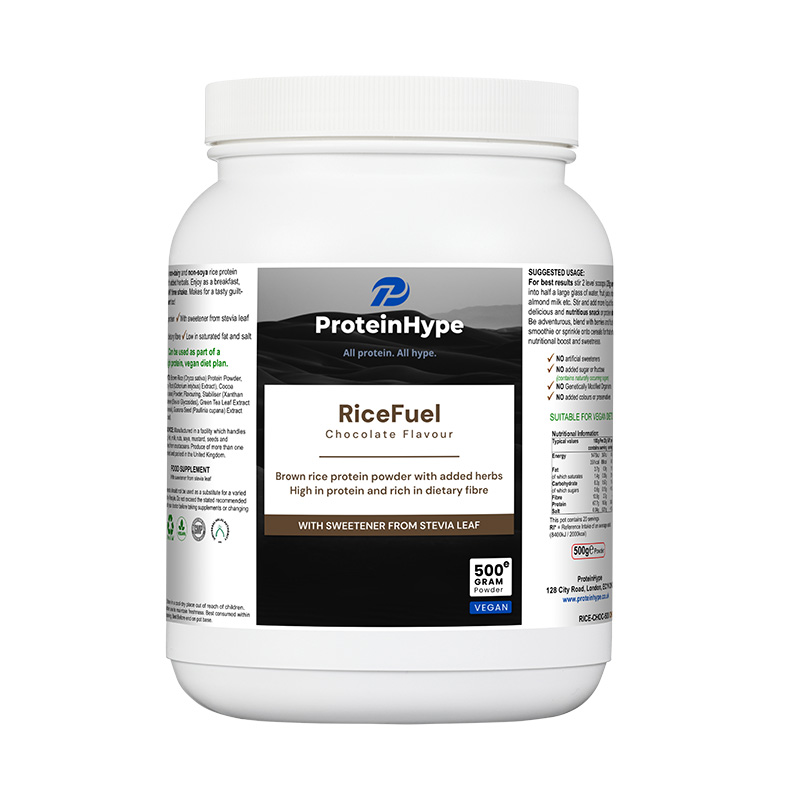
ProteinHype offers plant-based choices including RiceFuel Chocolate, PeaFuel Blend and HempFuel Natural.
Our Whey vs Plant Protein comparison explains the differences in more detail.
Meal Replacement Shakes
Meal replacement products are different from straightforward protein powders because they’re designed to provide more than protein alone.
Depending on the individual product, they may contain carbohydrates, fibre, vitamins and minerals.
ProteinHype’s MealFuel Vanilla and MealFuel Chocolate provide meal shake options.
Always check the nutritional information, ingredients and allergen information of the individual product.
Protein Guide for Beginners: When Should You Eat Protein?
Total daily intake is a major priority.
For people exercising regularly, distributing protein across several meals can also be useful.
The ISSN gives a general recommendation of approximately 20–40g of high-quality protein per serving, depending on factors including body size and age.
This isn’t an absorption limit.
Your body doesn’t simply stop absorbing protein once you consume 30g or 40g.
A simple protein guide for beginners approach might be to include a useful source of protein at breakfast, lunch and dinner, with a protein-containing snack or shake when necessary.
Protein Guide for Beginners: Protein After Exercise
No.
Protein after resistance training can support muscle protein synthesis, but you don’t need to consume a shake within a tiny 30- or 60-minute window.
Protein consumed before or after resistance exercise can be useful, and the anabolic effect of training lasts for considerably longer than an hour.
If several hours have passed since your last protein-containing meal, eating after training makes sense.
If you’ve eaten a substantial protein-containing meal shortly before training, there’s generally less urgency.
Our Pre vs Post Workout Protein Guide explains the evidence in more detail.
Protein Guide for Beginners: Protein Before Bed
You can, but you don’t have to.
Research indicates that pre-sleep protein can increase overnight muscle protein synthesis, with much of the research examining casein.
That doesn’t make a bedtime protein shake compulsory.
If you’ve already consumed an appropriate amount of protein across the day, you don’t need another serving simply because you’re going to bed.
Your overall diet remains the priority.
Protein Guide for Beginners: Common Mistakes
A good protein guide for beginners should also help you avoid making protein more complicated than necessary.
Assuming More Is Always Better
Once you’re consuming an appropriate amount, continually increasing protein doesn’t guarantee additional muscle growth.
Relying Too Heavily on Protein Powder
Supplements are convenient, but they shouldn’t automatically replace a varied diet containing nutritious whole foods.
Ignoring Total Daily Intake
Obsessing over the exact minute you drink a shake while consistently missing your overall protein requirement is focusing on the wrong detail.
Eating Almost All Your Protein at Dinner
You can use protein throughout the day rather than relying on one very large serving.
Forgetting About the Rest of Your Diet
Protein is only one part of nutrition.
You still need appropriate energy intake, carbohydrate, fats, fibre, vitamins, minerals and fluids.
Can You Eat Too Much Protein?
More protein isn’t automatically better.
Very high-protein diets can displace other nutritious foods and increase calorie intake.
People with certain medical conditions, particularly kidney disease, may also need individual advice about protein intake.
For healthy exercising adults, the ISSN considers approximately 1.4–2.0g/kg/day sufficient for most people.
There’s generally no reason for a beginner to assume they need extremely high amounts.
If you have kidney disease or another medical condition that could affect your dietary requirements, speak to an appropriate healthcare professional before substantially increasing your protein intake.
Protein Guide for Beginners: A Simple Starting Plan
You don’t need to change everything at once.
Step 1: Understand Your Goal
Are you simply trying to eat a balanced diet, or are you regularly resistance training and trying to build muscle?
Your protein requirements may differ.
Step 2: Estimate Your Intake
Look at a normal day and identify your main protein sources.
You don’t necessarily need to track forever. Even checking a typical day can show whether your intake is much lower or higher than you expected.
Step 3: Include Protein in Your Main Meals
Build meals around foods you enjoy rather than forcing yourself to eat a particular “fitness” food.
Step 4: Fill Genuine Gaps
If you’re consistently short of your target, adjust your meals, add a protein-rich snack or use protein powder for convenience.
Step 5: Keep the Bigger Picture in Mind
If you’re trying to build muscle, protein needs to work alongside progressive resistance training, adequate overall nutrition and recovery.
If you’re interested specifically in muscle gain, read our guide to using protein powder for muscle gain.
Protein Guide for Beginners: The Bottom Line
Protein doesn’t need to be complicated.
For UK adults, the general RNI is 0.75g/kg/day. People exercising regularly may have higher requirements, with approximately 1.4–2.0g/kg/day considered sufficient for most healthy exercising individuals.
If you’re regularly resistance training, around 1.6g/kg/day can provide a practical starting point for many people, although individual requirements vary.
Get most of your nutrition from a varied diet, include useful protein sources across the day and consider protein powder when it genuinely makes reaching your target more convenient.
This protein guide for beginners also shows that you don’t need perfect timing, enormous servings or multiple shakes every day.
That’s the main lesson from this protein guide for beginners: understand roughly how much you need, choose protein sources you enjoy and keep your approach simple enough to maintain.
Explore ProteinHype’s protein powder collection if a supplement would make reaching your daily protein target more convenient.
Note: This content is for informational purposes only and is not medical advice. Individual protein requirements vary. Speak to a qualified healthcare professional or registered dietitian if you have kidney disease, another medical condition, are pregnant or breastfeeding, or have concerns about your individual dietary requirements. Food supplements should not be used as a substitute for a varied, balanced diet.
Best Selling Protein Supplements
-

WheyFuel (Vanilla Flavour)
£25.99 — or subscribe to save 10% -
WheyFuel (Chocolate Flavour)
£25.99 — or subscribe to save 10% -
RiceFuel (Chocolate Flavour)
£15.99 — or subscribe to save 10%