Thinking about trying plant-based protein but not sure where to begin?
Whether you’re vegan, reducing dairy, lactose intolerant or simply interested in trying something different, there are now plenty of options available.
But there are also plenty of questions.
Can plant protein support muscle growth? Do you need to combine different sources? Is pea better than hemp? And how does it compare with whey?
The good news is that plant-based protein doesn’t need to be complicated.
Plant foods and protein powders can contribute towards your daily protein requirements, and the best option depends on your overall diet, training goals, preferences and tolerance.
This beginner’s guide explains the main types, how amino acids differ between sources and what to consider when choosing a powder.
If you’re completely new to protein, start with our Protein Guide for Beginners. You can also read our Whey vs Plant Protein comparison for a direct look at the differences.
What Is Plant-Based Protein?
Plant-based protein is simply protein derived from plant sources rather than animal sources such as milk, eggs, meat or fish.
Everyday sources include:
- Beans
- Lentils
- Chickpeas
- Peas
- Soya
- Tofu and tempeh
- Nuts
- Seeds
- Wholegrains
Protein powders can also be produced from plants, with pea, soya, rice and hemp among the most familiar options.
The British Dietetic Association (BDA) states that protein requirements can be met using protein-rich plant foods and that well-planned plant-based diets can provide the nutrients required for good health.
You can read more in the BDA’s guide to vegetarian, vegan and plant-based diets.
Protein powder isn’t therefore essential. It’s simply a convenient way to add additional protein when doing so through your normal meals isn’t practical.
Why Choose Plant-Based Protein?
There are several reasons someone might choose plant-based protein.
You might follow a vegan diet, want to consume fewer animal products or prefer a product that doesn’t contain milk-derived protein.
Someone who doesn’t tolerate a particular dairy product may also find an appropriate plant alternative useful, although individual digestive tolerance varies.
Others simply enjoy the flavour or texture.
None of these reasons makes plant protein universally better or worse than whey.
The most useful question is whether a particular product fits your diet and helps you achieve an appropriate overall protein intake.
Can Plant-Based Protein Build Muscle?
Yes, plant protein can contribute to a diet designed to support muscle growth.
Building muscle depends on much more than whether your shake comes from peas or milk. Resistance training, sufficient energy, appropriate total protein intake and consistency all matter.
However, it’s worth being more precise than saying every plant protein produces exactly the same response as every animal protein.
Research published in 2025 that pooled randomised controlled trials found a small advantage for animal protein for muscle mass overall. There was no significant difference between soya and milk protein, while the difference was greater when animal proteins were compared with the non-soya plant proteins included in the analysis.
Importantly, there was no significant difference between plant and animal protein for muscle strength or physical performance.
You can read the systematic review and meta-analysis on plant versus animal protein for the full findings.
The practical message isn’t that plant-based protein cannot build muscle.
It can.
Instead, protein source, quantity, amino-acid composition and your overall diet should all be considered rather than assuming every source is nutritionally identical.
Are Plant Proteins Incomplete?
You’ve probably heard plant proteins described as “incomplete”.
That’s an oversimplification.
Plant foods contain essential amino acids, although the proportions differ between foods and some sources provide relatively lower amounts of particular amino acids.
The BDA specifically cautions against treating plant proteins as simply “incomplete” or low-quality and explains that you don’t need to combine complementary plant foods at every individual meal.
What matters is consuming an appropriate variety of foods across your overall diet.
So you don’t need to carefully pair rice and beans at every meal simply to make the protein “complete”.
A varied diet can provide amino acids from different sources throughout the day.
Do You Need Plant Protein Blends?
Not necessarily.
Blending different protein sources can provide a complementary amino-acid profile, which is one reason you’ll find products containing more than one plant protein.
But that doesn’t mean every serving of plant-based protein must contain multiple sources.
Your body’s nutritional needs aren’t determined by a single scoop in isolation.
Consider the quality and variety of your overall diet.
If you eat a range of legumes, grains, nuts, seeds and other foods during the day, you’re already consuming protein from numerous sources.
A blend can be convenient, but it isn’t a requirement for everyone.
Pea Protein
Pea protein has become one of the most popular alternatives to whey.
It’s generally produced from yellow peas and concentrated to provide considerably more protein per serving than you’d obtain from eating ordinary peas.
Pea protein contains all of the essential amino acids, although its amino-acid profile differs from dairy proteins.
It can be used after exercise, between meals or whenever a convenient protein source fits your diet.
There’s no requirement to reserve it specifically for the post-workout window.
ProteinHype’s PeaFuel Blend is one option if you’re looking for a plant-based protein powder.
Hemp Protein
Hemp protein is produced from hemp seeds and differs somewhat from highly refined protein isolates.
Depending on how it’s processed, hemp powder can retain other components of the seed, including fibre and fat.
That means you should look at the complete nutrition label rather than comparing products solely by scoop size.
Hemp contains all nine essential amino acids, but describing a food as containing every essential amino acid doesn’t automatically mean it provides them in the same proportions as whey or other protein sources.
Hemp also has a distinctive earthy flavour that some people enjoy in smoothies, particularly alongside ingredients such as banana, berries or nut butter.
HempFuel Natural is ProteinHype’s hemp-based option.
Rice Protein
Rice protein provides another dairy-free alternative.
It’s generally made by extracting and concentrating protein from rice.
Rice protein has a different essential amino-acid profile from pea protein, which is why the two are sometimes combined.
But once again, you don’t have to combine them in every shake.
The foods you consume during the rest of the day also contribute amino acids to your diet.
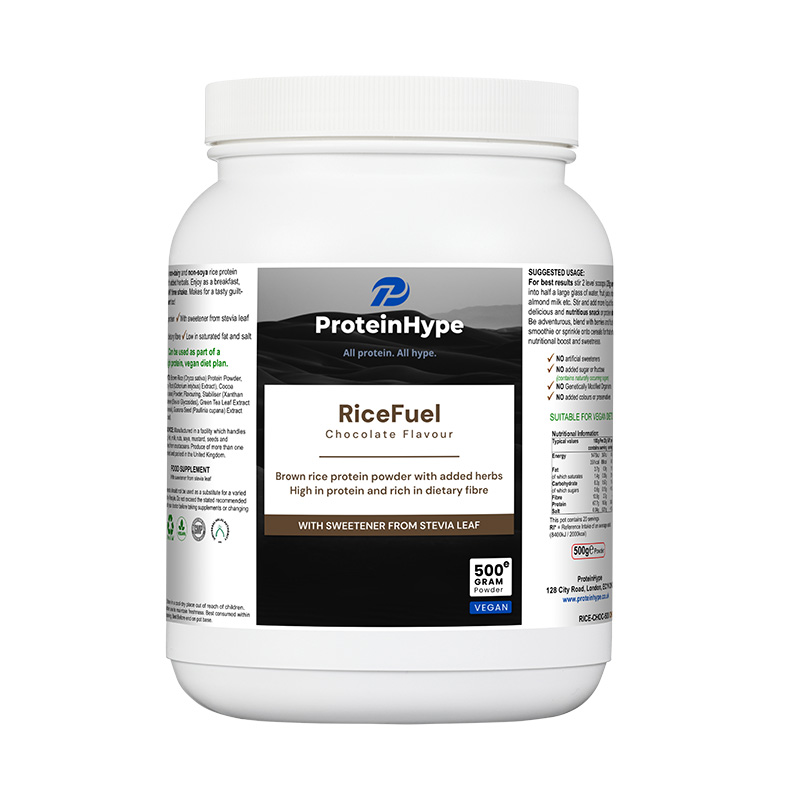
If rice protein suits your preferences, RiceFuel Chocolate provides another plant-based protein option.
Which Plant-Based Protein Is Best?
There isn’t one answer for everybody.
Consider several factors.
Protein Content
Check how many grams of protein the product actually provides per serving rather than assuming all powders are equivalent.
Serving sizes differ between brands and products.
Ingredients
Read the ingredient list.
Some products are predominantly protein, while others contain flavourings, sweeteners, carbohydrates, fats, vitamins, minerals or additional ingredients.
Neither approach is automatically better — they simply serve different purposes.
Dietary Requirements
If you avoid particular ingredients because of an allergy, intolerance or dietary preference, check the complete label carefully.
Don’t assume a product is suitable simply because its primary protein source comes from a plant.
Taste and Texture
This is easy to overlook.
The nutritional profile of a powder doesn’t matter much if you dislike it so much that you never use it.
Pea, rice and hemp can have noticeably different flavours and textures.
Your Overall Diet
Protein powder should be considered within the context of everything else you eat.
Someone consuming plenty of beans, lentils, tofu and other high-protein foods may have very different supplementation needs from someone struggling to include enough protein in meals.
Is Plant-Based Protein Better for Digestion?
Not automatically.
It’s common to hear that plant protein is universally easier to digest or causes less bloating than whey, but individual tolerance varies considerably.
Someone who doesn’t tolerate a particular milk-based product may prefer a dairy-free alternative.
Someone else might tolerate whey perfectly well but experience digestive discomfort from particular plant ingredients, sweeteners or larger quantities of fibre.
Rather than assuming one category is easier for everyone, pay attention to the specific product and how you respond to it.
If you have persistent digestive symptoms or suspected food allergies or intolerances, speak to an appropriate healthcare professional.
Does Plant-Based Protein Contain BCAAs?
Yes.
Plant proteins contain branched-chain amino acids — leucine, isoleucine and valine — although the amounts and proportions differ between protein sources.
BCAAs aren’t unique to whey.
However, focusing solely on BCAAs can distract from the bigger nutritional picture.
Your body requires all nine essential amino acids, not just three of them.
If you’d like to understand their role in more detail, read our BCAAs guide.
How Much Plant-Based Protein Do You Need?
There isn’t a completely separate protein requirement simply because your protein comes from plants.
Your needs depend on factors including body size, activity, training, age and overall diet.
For someone exercising regularly, the amount required may differ from that of a sedentary person.
Rather than deciding how many shakes to consume first, work out what an appropriate overall protein intake looks like for you.
Our Protein Guide for Beginners explains this in more detail.
Then look at how much you’re already obtaining from food.
Plant-based protein powder can fill a genuine gap rather than automatically being added on top of an already adequate diet.
When Should You Take Plant-Based Protein?
There’s no special time that applies only to plant protein.
You can consume it:
- With breakfast
- Between meals
- Before training
- After training
- In a smoothie
- As part of a recipe
- Whenever it conveniently helps you meet your needs
If you’re using plant-based protein for training, your overall daily intake remains important.
You don’t need to rush to drink a shake within 30 minutes of finishing your workout.
Our Protein Timing Guide explains the evidence around timing in more detail.
Can You Use Plant Protein for Baking?
Yes, protein powders can be incorporated into recipes as well as shakes.
Depending on the product, you could experiment with adding powder to:
- Porridge
- Pancakes
- Smoothies
- Baked oats
- Homemade snack recipes
Just remember that protein powder changes the texture and moisture balance of recipes.
Replacing a large proportion of flour with powder won’t necessarily produce the same result, so start with recipes specifically designed to include protein powder or experiment with smaller quantities.
What About Vegan Meal Shakes?
A protein shake and a meal replacement aren’t necessarily the same thing.
A basic protein powder primarily provides protein.
A meal-replacement product may also contain meaningful amounts of carbohydrate, fat, fibre, vitamins and minerals.
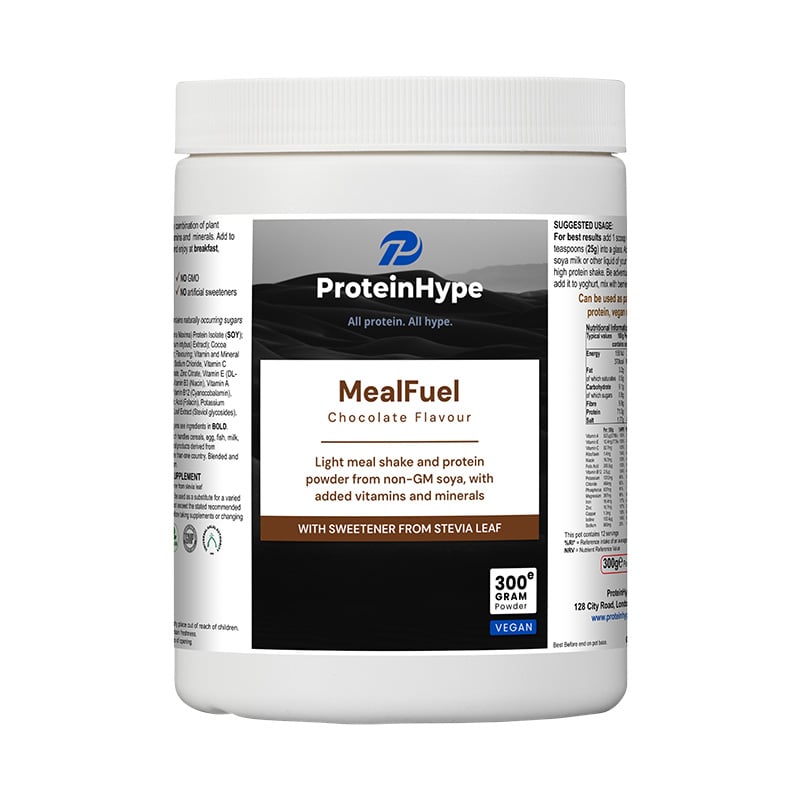
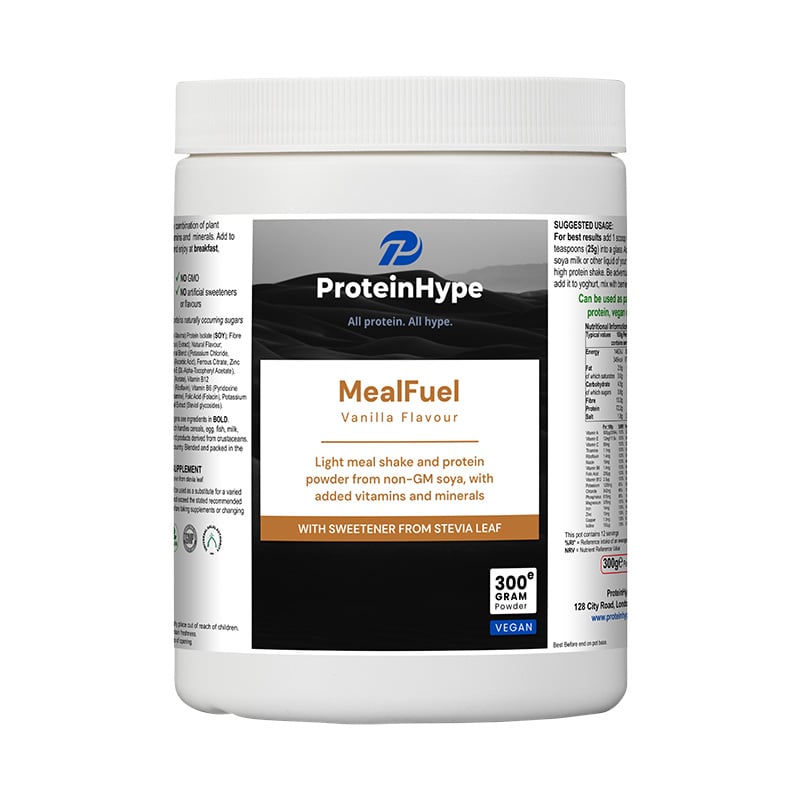
If you’re considering something such as MealFuel Vanilla or MealFuel Chocolate, check the complete nutritional information and preparation instructions to understand what the individual product provides.
Don’t assume every shake labelled “vegan” is automatically a nutritionally complete meal.
Getting Enough Protein on a Vegan Diet
You don’t have to rely on supplements to meet your requirements.
The BDA lists foods including lentils, beans, chickpeas, seeds, nuts, nut butters, tofu and tempeh as useful protein sources.
A varied vegan diet could therefore include foods such as:
Breakfast: Porridge with soya milk, nuts and seeds
Lunch: Lentil or chickpea-based meal
Snack: Plant-based yoghurt, nuts or a protein shake
Dinner: Tofu, tempeh, beans or another protein-rich main ingredient
The BDA also highlights other nutrients that deserve attention when animal foods are reduced or eliminated, including vitamin B12, vitamin D, iodine, calcium, iron and selenium.
In particular, vitamin B12 isn’t naturally available from plant foods in a reliable form, so people following a vegan diet need an appropriate source from fortified foods or supplementation.
Plant-based protein powder shouldn’t distract from the importance of the rest of your diet.
Plant-Based Protein for Beginners
If you’re completely new to plant protein, there’s no need to buy several powders at once.
Start simply.
Choose a source that fits your diet and preferences.
Check the protein content and ingredients.
Follow the manufacturer’s serving and preparation instructions.
Then see whether you actually enjoy using it.
You might prefer pea protein in a simple shake, hemp blended into a smoothie or rice protein because you prefer its flavour.
There isn’t a prize for finding the theoretically “perfect” powder.
Consistency and your overall diet matter much more.
Plant-Based Protein vs Whey
Neither category automatically wins for every person.
Whey is a high-quality milk-derived protein with a strong essential amino-acid profile and extensive research behind its use alongside resistance training.
Plant proteins provide an alternative for people who avoid dairy or animal-derived ingredients and can contribute effectively towards overall protein intake.
Research comparing them isn’t completely uniform, so claims that all plant proteins are identical to whey — or that whey is always necessary for muscle growth — both go too far.
Your appropriate choice depends on your goals, dietary preferences, tolerance and the rest of your diet.
For a more detailed comparison, read our Whey vs Plant Protein: Full Comparison.
Choosing Your First Plant-Based Protein
A beginner can make the decision with four questions:
What Do You Want From It?
If you’re simply looking for an easy way to increase your protein intake, prioritise the actual protein content, ingredients and a flavour you’ll use consistently.
Does It Fit Your Diet?
Check allergens, dietary suitability and the complete ingredient list.
Do You Like It?
Taste and texture matter.
A product you genuinely enjoy is more useful than one you abandon after two servings.
Do You Actually Need It?
Look at your existing diet first.
If you’re already comfortably meeting your requirements from food, additional powder may not be necessary.
If convenience is the problem, that’s where a supplement can be particularly useful.
Plant-Based Protein: The Bottom Line
Plant-based protein can be a convenient and effective part of a balanced diet.
Pea, hemp, rice and other plant proteins each have different nutritional characteristics, tastes and textures, so there isn’t one universally superior option.
Plant proteins contain essential amino acids, and you don’t need to carefully combine complementary sources at every meal.
For people interested in building muscle, plant protein can support an appropriate training and nutrition programme, although research doesn’t show that every plant source is nutritionally identical to animal protein.
The bigger priorities are your overall diet, appropriate protein intake, resistance training and consistency.
If you’re new to plant-based protein, choose one option that fits your requirements and see how easily it fits into your normal routine.
You can explore ProteinHype’s plant-based protein range to compare the available options.
Note: This content is for informational purposes only and is not medical advice. Speak to a qualified healthcare professional or registered dietitian if you have concerns about your individual protein requirements, allergies, intolerances or diet. Food supplements should not be used as a substitute for a varied, balanced diet.
Best Selling Plant-Based Protein Supplements
-

RiceFuel (Chocolate Flavour)
£16.99 — or subscribe to save 10% -
MealFuel (Chocolate Flavour)
£16.99 — or subscribe to save 10% -
MealFuel (Vanilla Flavour)
£16.99 — or subscribe to save 10%