Protein should be relatively simple. Yet when you’re starting your fitness or nutrition journey, conflicting advice can make it surprisingly confusing.
Does eating lots of protein damage your kidneys? Can your body only use 30g at once? Is plant protein inferior to whey? And do you really need a shake within 30 minutes of finishing your workout?
Many protein myths contain a small piece of truth that’s been exaggerated into a rule that doesn’t accurately reflect the evidence.
This beginner’s guide busts six common protein myths, explains where the confusion comes from and gives you a more practical way to approach protein.
If you’re completely new to the subject, start with our Protein Guide for Beginners. You can also read about the benefits of protein supplements and where they can fit into a balanced diet.
Protein Myths: The Truth at a Glance
| Common Myth | What You Need to Know |
|---|---|
| Protein damages healthy kidneys | Evidence doesn’t support the simple claim that higher protein intake causes kidney damage in healthy adults, but kidney disease changes the situation. |
| Your body can only absorb 30g | Your digestive system doesn’t simply stop absorbing protein after an arbitrary number of grams. |
| Plant protein can’t build muscle | Plant proteins can support muscle growth, although different sources have different amino-acid profiles and characteristics. |
| Protein powder is only for bodybuilders | Protein powder is simply a convenient concentrated source of dietary protein. |
| More protein automatically means more muscle | Resistance training provides the stimulus; protein helps provide the amino acids needed to support adaptation. |
| You need protein within 30 minutes | The post-workout opportunity is considerably wider than the traditional 30-minute “anabolic window”. |
Let’s examine these protein myths individually.
Protein Myth 1: High Protein Intake Damages Your Kidneys
This is one of the most persistent protein myths.
The kidneys remove waste products from the blood, and protein metabolism affects kidney workload. That observation has sometimes been turned into the much broader claim that eating a high-protein diet damages otherwise healthy kidneys.
The evidence is more nuanced.
A systematic review and meta-analysis of controlled trials found that higher-protein diets in adults without chronic kidney disease did not adversely affect changes in glomerular filtration rate compared with lower-protein diets.
That doesn’t mean unlimited protein intake has been proven completely risk-free for every person in every circumstance.
It means the common claim that consuming more protein automatically damages healthy kidneys isn’t supported by the available evidence.
You can read the systematic review on higher protein intake and kidney function for more detail.
Kidney Disease Is Different
This distinction is important when separating protein myths from genuine medical considerations.
People with chronic kidney disease may receive specific advice about protein intake as part of managing their condition.
The NHS guidance on chronic kidney disease explains that dietary changes may be recommended depending on the individual and stage of disease.
So don’t take a general fitness recommendation and apply it to someone with diagnosed kidney disease.
If you have kidney disease, abnormal kidney tests or another medical condition affecting your dietary requirements, discuss major dietary changes with an appropriate healthcare professional.
What About Drinking More Water?
You’ll sometimes see this protein myth answered with “high protein is safe as long as you drink enough water.”
That’s another oversimplification.
Adequate hydration is important for general health, but drinking extra water isn’t a proven safeguard that makes an otherwise inappropriate protein intake safe.
Follow normal hydration guidance rather than using water as insurance against excessive supplementation.
Protein Myth 2: Your Body Can Only Absorb 30g of Protein at Once
This is probably one of the most repeated protein myths in gyms.
You’ll often hear that anything above 20g, 30g or 40g in a meal is “wasted”.
That’s not how digestion works.
Your body doesn’t reach an arbitrary number and suddenly stop absorbing amino acids.
The confusion largely comes from research investigating how different quantities of protein affect muscle protein synthesis following exercise.
That’s a different question from asking how much protein your digestive system can absorb.
Is 20–40g Still a Useful Serving?
It can be.
The International Society of Sports Nutrition suggests approximately 20–40g of high-quality protein per serving as a useful general recommendation for exercising individuals.
It also recommends distributing protein servings throughout the day, often around every three to four hours.
You can read the ISSN position stand on protein and exercise for the full recommendations.
One of the common protein myths is treating these numbers as a hard physiological ceiling.
A 2023 study compared 25g and 100g of protein after exercise and found that the larger serving produced a greater and more prolonged anabolic response.
That research challenges the simplistic idea that protein above a small fixed serving is automatically wasted.
What Happens to Protein Your Muscles Don’t Immediately Use?
Protein has many functions beyond building skeletal muscle.
Amino acids are involved in producing enzymes, hormones and other proteins throughout the body.
They can also be oxidised and used in other metabolic processes.
So one of the easiest protein myths to discard is the idea that everything beyond exactly 30g simply disappears or becomes useless.
Protein Myth 3: Plant Protein Is Inferior
Plant protein is another subject surrounded by protein myths and oversimplified claims.
Saying all plant protein is “inferior” is inaccurate.
But saying every plant protein is nutritionally identical to whey is also too simplistic.
Different proteins have different amino-acid profiles, digestibility and leucine content.
Some individual plant proteins provide relatively lower amounts of particular essential amino acids compared with animal-derived proteins.
That doesn’t mean you can’t build muscle while eating plant-based protein.
Can You Build Muscle With Plant Protein?
Yes.
Appropriate plant protein can contribute to a diet that supports resistance training and muscle growth.
Your overall protein intake, total diet, training programme and consistency all matter.
A 2025 systematic review and meta-analysis found a small advantage for animal protein for muscle mass overall, particularly in comparisons involving non-soy plant proteins. However, there was no significant difference between plant and animal protein for muscle strength or physical performance.
So the evidence doesn’t support either extreme.
Plant protein works, but that doesn’t require pretending every protein source is identical.
If you’re considering a dairy-free option, our Beginner’s Guide to Plant-Based Protein explains pea, hemp, rice and other options in more detail.
You can also compare the two directly in our Whey vs Plant Protein guide.
Protein Myth 4: Protein Supplements Are Only for Bodybuilders
Of all the protein myths, this one probably comes from protein powder’s long association with bodybuilding and gym culture.
Despite these protein myths, protein powder is ultimately a food supplement.
Its primary advantage is convenience.
You can obtain protein from ordinary foods such as:
- Meat and fish
- Eggs
- Dairy products
- Beans and lentils
- Soya foods
- Nuts and seeds
- Other protein-rich foods
You don’t need protein powder simply because you exercise.
Likewise, you don’t need to be a bodybuilder to use it.
When Can Protein Powder Be Useful?
A powder might be convenient when:
- You don’t have time to prepare a full meal
- Your usual meal is relatively low in protein
- You want something easy after training
- You’re travelling
- You’re following a diet where meeting your requirements requires more planning
The important word is convenient.
Protein supplements aren’t “nutritional insurance” that everyone should take just in case.
If your normal diet already provides everything you need, adding a shake isn’t automatically beneficial.
Our protein powder range is therefore best viewed as another way to supplement your normal diet when convenience makes it useful.
Protein Myth 5: More Protein Automatically Builds More Muscle
This is another example of protein myths taking a genuine nutritional principle too far.
Unlike some protein myths suggest, simply increasing protein doesn’t automatically increase muscle growth.
Protein supplies amino acids your body uses to build and maintain proteins throughout the body, including muscle proteins.
But simply consuming more and more protein doesn’t automatically create more muscle.
Resistance training provides an important stimulus for muscle growth.
Nutrition then supports your body’s response to that training.
More Isn’t Always Better
If your protein intake is inadequate for your needs, increasing it may be useful.
Once you’re consuming an appropriate amount, however, continually adding more doesn’t mean muscle growth will continue increasing proportionally.
Training quality, progressive overload, energy intake, sleep, recovery and genetics also influence results.
This is why a protein shake can’t replace an appropriate resistance-training programme.
If muscle gain is your goal, read our guide on how to use protein powder for muscle gain.
What About People Who Don’t Lift Weights?
Protein remains an essential nutrient whether you lift weights or not.
Your body needs it for much more than bodybuilding.
The mistake is assuming that because protein is necessary, consuming increasingly large quantities must automatically produce additional benefits.
Good nutrition is about meeting your needs, not simply maximising one nutrient.
Protein Myth 6: You Must Drink Protein Within 30 Minutes of Training
The famous 30-minute anabolic window is one of the most recognisable protein myths.
You’ve probably seen someone finish their final repetition and immediately reach for a shaker.
Despite the protein myths surrounding workout timing, there’s nothing wrong with drinking protein straight after training.
What’s misleading is believing that you’ve ruined your workout if you don’t.
How Wide Is the Anabolic Window?
Resistance exercise increases your muscles’ responsiveness to protein for considerably longer than 30 minutes.
The ISSN notes that consuming high-quality protein from immediately after exercise through approximately two hours afterwards robustly stimulates muscle protein synthesis.
But even that shouldn’t be interpreted as a hard deadline after which protein suddenly stops working.
What you ate before your workout also matters.
If you consumed a protein-rich meal relatively close to training, amino acids from that meal may still be available afterwards.
If you trained after a long period without eating, consuming protein after exercise becomes a more obvious practical priority.
Pre vs Post Workout Protein
A 2025 systematic review and meta-analysis directly compared protein consumed before versus after resistance training.
It found that lean-body-mass gains weren’t importantly affected by whether supplementation occurred before or after training.
That makes the traditional “post-workout or you’ve missed your chance” message difficult to justify.
Our Pre vs Post Workout Protein Guide looks specifically at this question.
For the wider picture, our Protein Timing Guide explains how to distribute protein across the rest of your day.
Why Do Protein Myths Spread So Easily?
Nutrition is particularly vulnerable to simple rules.
“Never eat more than 30g.”
“Drink your shake within 30 minutes.”
“Plant protein doesn’t work.”
These statements are easy to remember and repeat.
The actual evidence is usually more contextual.
Research might study a particular population, protein source, dose, training programme or outcome. A finding about muscle protein synthesis over several hours can then become a sweeping claim about how much protein the human body can absorb.
That’s why it’s useful to ask a few questions whenever you encounter new protein myths:
- What does the research actually measure?
- Who was studied?
- Was the claim about muscle growth, digestion or something else?
- Is a useful guideline being presented as a hard biological limit?
- Is someone trying to sell a particular solution?
You don’t need to become a nutrition researcher.
Simply being cautious about absolute claims can help you avoid a lot of misinformation.
A Simple Approach to Protein for Beginners
Instead of letting protein myths dictate your diet, focus on a few simple fundamentals.
Work Out Your Overall Needs
Once you look beyond common protein myths, start with your normal diet and activity.
Our Protein Guide for Beginners provides a starting point.
Prioritise Normal Food
Protein powder can be convenient, but it doesn’t need to replace ordinary protein-rich foods.
Build your diet around a varied selection of foods that suit your dietary requirements.
Use Supplements Where They’re Helpful
A shake can fill a genuine gap or provide a convenient option when preparing food isn’t practical.
You don’t need to manufacture a reason to use one.
Train Appropriately for Your Goal
If building muscle is the objective, protein and resistance training work together.
Increasing your supplement intake without an appropriate training stimulus isn’t a shortcut to muscle growth.
Don’t Obsess Over Timing
Eating protein somewhere around your workout can be convenient.
You don’t need to organise your entire day around a 30-minute countdown.
Consistency across weeks and months matters much more than whether Tuesday’s shake was 45 minutes late.
Protein Myths: The Bottom Line
Many protein myths begin with a real observation and then take it much further than the evidence supports.
Higher protein intake doesn’t automatically mean kidney damage in healthy adults, but people with kidney disease may need individual dietary advice.
Your body doesn’t stop absorbing protein after 30g.
Plant proteins can contribute effectively to muscle-building diets, although different protein sources aren’t nutritionally identical.
Protein powder isn’t reserved for bodybuilders, but neither is it something everyone needs.
Eating more protein doesn’t automatically create more muscle without the appropriate training stimulus.
And finally, you don’t need to panic about drinking a shake within 30 minutes of your last repetition.
Understanding these protein myths makes protein nutrition much simpler.
Look beyond protein myths and focus on an appropriate overall intake, eat a varied diet, train consistently if muscle growth is your goal and use supplements when their convenience genuinely helps.
You can explore ProteinHype’s protein powder range if you’re looking for a convenient way to supplement your normal diet.
Note: This content is for informational purposes only and is not medical advice. Speak to a qualified healthcare professional or registered dietitian if you have kidney disease, another medical condition, concerns about your individual protein requirements or questions about dietary supplements. Food supplements should not be used as a substitute for a varied, balanced diet.
Best Selling Protein Supplements
-

WheyFuel (Vanilla Flavour)
£39.99 — or subscribe to save 10% -
WheyFuel (Chocolate Flavour)
£39.99 — or subscribe to save 10% -
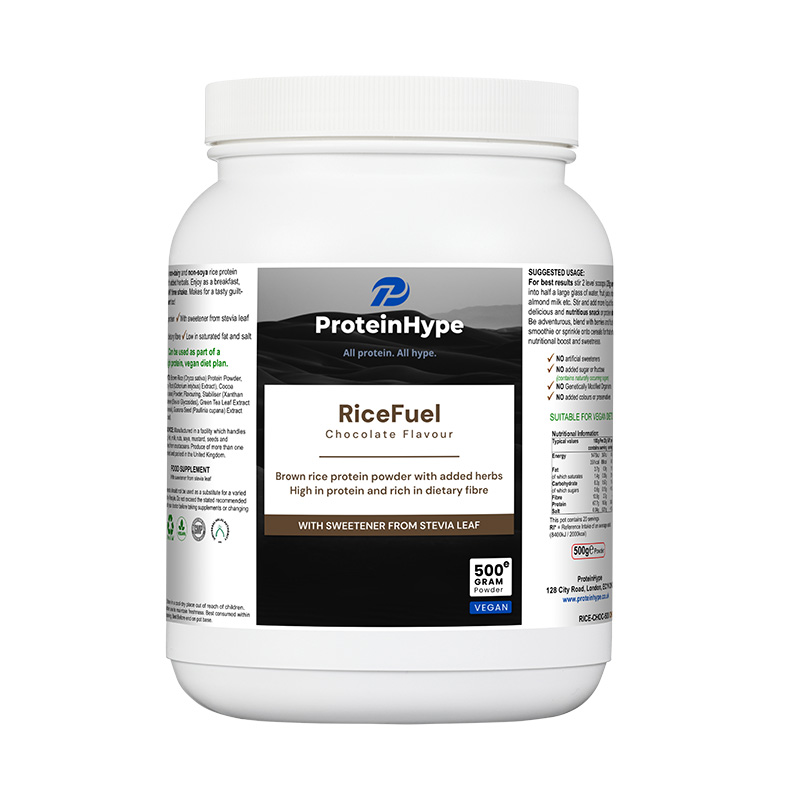
RiceFuel (Chocolate Flavour)
£16.99 — or subscribe to save 10%