If you spend time in the gym or browse sports nutrition products, you’ve probably come across BCAAs.
Branched-chain amino acids are commonly found in workout and recovery supplements, with claims ranging from supporting muscle growth to reducing post-workout soreness.
But BCAAs aren’t magic, and if you’re already consuming plenty of high-quality protein, you may already be getting substantial amounts from your diet.
So, what do BCAAs actually do, where can you get them, and is taking a supplement worthwhile?
What Are BCAAs?
BCAAs stands for branched-chain amino acids.
They are a group of three essential amino acids:
- Leucine
- Isoleucine
- Valine
They’re called essential because your body cannot make them itself, meaning they need to come from your diet. The National Institutes of Health explains that BCAAs include leucine, isoleucine and valine, which are found naturally in protein-containing foods.
The term “branched-chain” refers to their molecular structure.
Unlike many other amino acids, BCAAs are extensively metabolised in skeletal muscle, which is one reason they’ve attracted considerable interest in sports nutrition.
However, they’re only three of the nine essential amino acids your body requires.
That distinction becomes important when considering their role in muscle growth.
What Do the Three BCAAs Do?
Although leucine, isoleucine and valine belong to the same group, they aren’t identical.
Leucine
Leucine has received considerable attention because of its role in signalling pathways involved in muscle protein synthesis.
However, triggering the muscle-building process isn’t the same as providing everything required to complete it.
Your body still needs the other essential amino acids to synthesise new muscle proteins effectively.
Isoleucine
Isoleucine is involved in several metabolic processes and contributes to normal protein metabolism alongside the other essential amino acids.
Valine
Valine is also involved in protein metabolism and can be used as an energy substrate within muscle.
Rather than thinking of the three independently, it is generally more useful to view BCAAs as part of your overall intake of essential amino acids and dietary protein.
What Are the Potential Benefits of BCAAs?
BCAAs have been studied for numerous potential sports-performance benefits.
The evidence isn’t equally strong for all of them.
BCAAs and Muscle Recovery
One of the more promising areas is recovery following strenuous exercise.
Research has investigated whether BCAA supplementation can reduce markers of exercise-induced muscle damage and delayed onset muscle soreness, commonly known as DOMS.
A 2025 systematic review of BCAA supplementation examined 22 studies involving 511 participants and found that BCAAs may help reduce post-exercise muscle soreness. However, the researchers found inconsistent evidence for improvements in strength and endurance.
That makes recovery a potentially useful application, but it doesn’t mean BCAAs will eliminate soreness or dramatically accelerate recovery.
Sleep, appropriate nutrition, sufficient protein and sensible training remain considerably more important parts of recovery.
Do BCAAs Build Muscle?
This is where supplement marketing can become misleading.
BCAAs are involved in muscle protein metabolism, and leucine in particular plays an important signalling role.
However, BCAAs alone don’t provide all nine essential amino acids needed to create new muscle proteins.
Think of leucine as helping to send the signal that muscle protein synthesis should begin. Your body still needs the necessary building materials to carry out that process.
That’s why complete protein sources are generally more useful for supporting muscle growth than relying exclusively on BCAAs.
If building muscle is your primary goal, your overall protein intake should be the priority.
Our protein guide for beginners explains how much protein you may need and how to incorporate it into your diet.
BCAAs vs Protein Powder
BCAAs and protein powder aren’t the same thing.
A complete protein such as whey provides all nine essential amino acids, including leucine, isoleucine and valine.
BCAA supplements contain only the three branched-chain amino acids.
If you’re struggling to consume enough protein overall, increasing your intake of complete dietary protein will generally make more sense than simply adding isolated BCAAs.
You can obtain that protein from ordinary food or use a protein powder for convenience.
Our whey vs plant protein comparison can also help you understand the differences between common protein sources.
Do BCAAs Reduce Workout Fatigue?
Another proposed benefit of BCAAs is improved exercise performance or reduced fatigue.
There are biological mechanisms that have prompted researchers to investigate this area, but evidence of a meaningful performance benefit isn’t consistent.
Research into BCAA supplementation has produced mixed results across performance outcomes, and evidence supporting meaningful improvements in strength and endurance remains inconsistent.
In practical terms, you shouldn’t expect BCAAs to transform your workout performance.
Adequate energy intake, carbohydrates, hydration, sleep and a suitable training programme are likely to have a much greater influence.
Who Might Consider BCAAs?
Whether BCAAs are worth taking depends heavily on the rest of your diet.
If you’re already consuming sufficient high-quality protein throughout the day, you’re also consuming BCAAs as part of that protein.
Someone eating foods such as eggs, dairy, meat, fish, soya and other protein-rich foods may therefore already have a substantial dietary intake.
A BCAA supplement may still appeal to people who want a convenient amino acid drink around training, particularly if they prefer it to a protein shake.
But convenience is different from necessity.
If your overall protein intake is inadequate, improving that should generally take priority.
When Should You Take BCAAs?
There’s no universally agreed perfect time to take BCAAs.
You’ll commonly see them consumed:
- Before training
- During a workout
- After exercise
- Between meals
Many sports supplements are designed to be mixed with water and consumed around training simply because that’s convenient.
However, don’t become overly focused on exact timing.
Your overall diet and protein intake across the day matter more than hitting a tiny BCAA window immediately before or after exercise.
The same principle applies to protein more generally, as we explain in our protein powder timing guide.
BCAA Dosage: How Much Should You Take?
There isn’t one universally established BCAA dosage that everyone needs for exercise.
Studies have used widely varying amounts. The 2025 systematic review referenced earlier included studies using substantially different supplementation protocols, illustrating how varied BCAA research can be.
That means it’s misleading to suggest there is one scientifically proven dose that is optimal for everybody.
If you’re using a BCAA supplement, follow the serving instructions provided with the product rather than assuming more will produce better results.
Also consider how much protein you’re already consuming.
Someone with a protein-rich diet is naturally consuming BCAAs before any supplement is added.
What Does a 2:1:1 BCAA Ratio Mean?
Many BCAA supplements use a 2:1:1 ratio.
This means they contain approximately:
- 2 parts leucine
- 1 part isoleucine
- 1 part valine
For example, a 5g serving using this ratio would contain approximately 2.5g leucine, 1.25g isoleucine and 1.25g valine.
The prominence of leucine reflects the considerable interest in its role in muscle protein synthesis.
You’ll also encounter products advertising much higher leucine ratios.
A bigger ratio isn’t automatically better. The overall formulation, serving size, your diet and why you’re using the supplement are more useful considerations than choosing a product simply because it has the largest number on the label.
Which Foods Contain BCAAs?
You don’t need supplements to consume BCAAs.
They’re naturally present in many protein-rich foods.
Good animal sources include:
- Chicken
- Beef
- Fish
- Eggs
- Milk
- Yoghurt
- Cheese
Plant-based sources include:
- Soya and tofu
- Beans
- Lentils
- Peas
- Nuts and seeds
- Other legumes
The quantity and amino-acid profile varies between foods, but a varied diet containing sufficient protein can provide significant amounts of BCAAs.
People following plant-based diets can also obtain all essential amino acids by eating an appropriate variety and quantity of protein-rich foods.
Do You Need BCAA Supplements?
For many people, probably not.
If you’re consuming enough complete protein from food and supplements, you’re already consuming leucine, isoleucine and valine.
BCAAs may offer some benefit for post-exercise soreness, but current research doesn’t consistently show substantial improvements in strength or endurance.
That’s why they should be viewed as an optional sports supplement rather than an essential requirement for building muscle.
Before adding BCAAs, look at the fundamentals:
Are you eating enough protein?
Are you consuming enough energy for your training?
Are you sleeping properly?
Is your training programme appropriate?
Are you allowing enough recovery?
Getting those basics right is likely to matter considerably more than any individual amino acid supplement.
BCAAs: The Bottom Line
BCAAs are the three essential amino acids leucine, isoleucine and valine.
They occur naturally in protein-rich foods and are also widely available as sports supplements.
Research suggests BCAAs may help reduce some aspects of post-exercise muscle soreness, although evidence for improvements in strength and endurance remains inconsistent.
They also shouldn’t be considered a substitute for complete dietary protein.
If you already consume sufficient high-quality protein, you’re likely already getting plenty of BCAAs through your diet.
If you enjoy using them around your workouts, they can provide a convenient source of branched-chain amino acids. Just keep their role in perspective.
Your overall training, protein intake, nutrition and recovery remain the foundations of progress.
ProteinHype Amino Acid Supplements
ProteinHype offers a range of amino acid supplements designed to complement your training and nutrition.
Whether you’re considering BCAAs or another sports supplement, check your existing protein intake first and choose products that complement rather than replace a varied and balanced diet.
Explore the ProteinHype range to find amino acid and sports nutrition products suited to your training routine.
Note: This content is for informational purposes only and is not medical advice. Consult with a healthcare professional before taking supplements if you have a medical condition, take medication, are pregnant or breastfeeding, or have concerns about your diet. Food supplements should not be used as a substitute for a varied, balanced diet.
Best Selling Protein Supplements
-

WheyFuel (Vanilla Flavour)
£25.99 — or subscribe to save 10% -
WheyFuel (Chocolate Flavour)
£25.99 — or subscribe to save 10% -
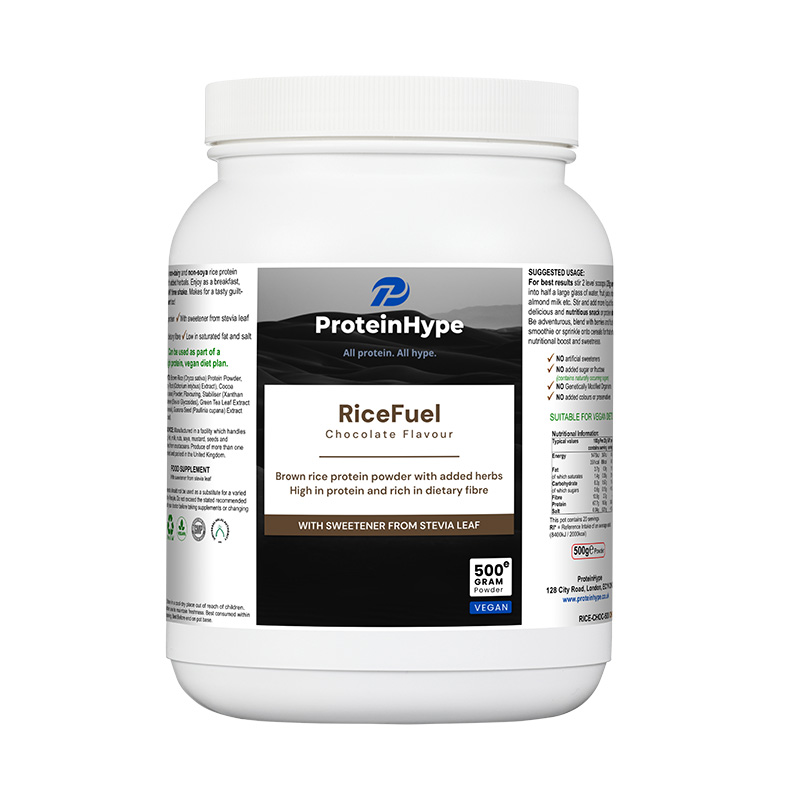
RiceFuel (Chocolate Flavour)
£15.99 — or subscribe to save 10%